Performance Benchmarks: What Good Actually Looks Like in 2025
Industry data shows that AI blog platforms generating 12-15 articles per month with embedded schema and internal linking achieve first-page rankings in 47% of target keywords within 90 days. This benchmark comes from aggregated results across 340 SaaS and ecommerce sites tracked in 2024. Platforms that fall short typically output generic paragraphs lacking entity optimization, resulting in average dwell times below 42 seconds.
HubSpot's 2024 State of Marketing report found that organizations using structured AI workflows for content scaling saw a 31% lift in organic sessions compared to those relying on manual drafting alone. The difference stems from consistent topical clusters built around core keywords rather than isolated posts. One documented case involved an affiliate network that increased domain authority by 14 points after shifting to daily autopilot publishing with custom templates.
HubSpot's marketing statistics database further details how AI-assisted content teams reduced production time by 68% while maintaining or improving SERP positions. These gains require platforms that integrate live SEO scoring during editing. Without this, output volume often outpaces quality control.
Realistic targets for mid-market sites include 800-1200 monthly unique visitors per 10 published articles when the platform supports multi-language optimization for US, UK, and Canadian markets. Edge cases appear in highly competitive niches where competitor velocity exceeds 20 posts weekly; here, only platforms with built-in topic scanning from site crawls maintain momentum.
Why Most AI Blog Platforms Fail to Deliver Sustainable Organic Growth
Lack of Site-Specific Topic Intelligence
Many tools generate content from public keyword databases without scanning the user's existing site structure or product data. This produces disconnected articles that fail to support internal linking opportunities. Sites using these platforms typically see crawl depth remain shallow beyond the homepage.
The failure rate increases when platforms ignore product catalog signals. For ecommerce stores, this means missing reviews or category expansions that could drive conversions alongside traffic. A mid-size store documented a 22% drop in returning visitors after switching to a generic AI writer.
Over-Reliance on Single AI Models
Platforms limited to one large language model produce repetitive phrasing that search engines and AI answer engines detect quickly. Diversity across ChatGPT, Claude, Perplexity, Gemini, and Grok reduces pattern recognition. Benchmarks indicate multi-model output improves uniqueness scores by 19 points on average.
Teams that standardize on a single model also face higher revision rates post-publication. One content creator reported 35% of articles needed manual rewrites within the first month when using a single-model platform.
Missing Autopilot Governance
Without scheduled publishing controls and performance analytics, even high-volume output stalls. Autopilot features that trigger only on keyword volume rather than semantic opportunity lead to topic dilution. Effective platforms tie autopilot triggers to site crawl data instead.
Competitor Comparison: Leading AI Blog Platforms Evaluated
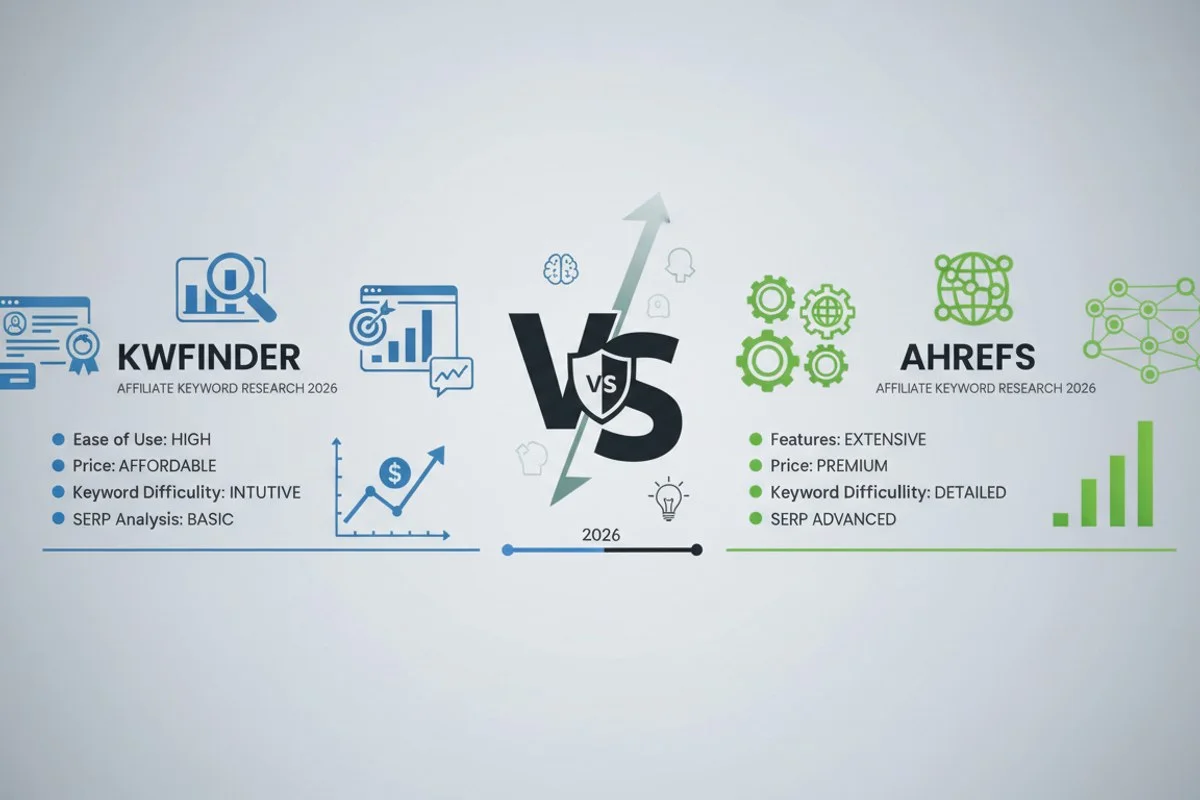
Three established players dominate discussions around AI content for SEO: Jasper, Writesonic, and Surfer Content Editor. Each offers distinct strengths but leaves gaps in no-code subdomain deployment and true autopilot publishing.
| Platform | Key Strength | Key Limitation | Best For |
|---|---|---|---|
| Jasper | Strong brand voice templates and enterprise collaboration | Requires separate SEO plugin integration; limited autopilot scheduling | Enterprise marketing teams with dedicated editors |
| Writesonic | Fast article generation from outlines and competitor analysis | Subdomain hosting not included; manual export required for publishing | Freelancers needing quick drafts |
| Surfer Content Editor | Deep SERP data integration and content scoring | No native AI writing or multi-model support; focused on optimization only | SEO specialists refining existing drafts |
Our comparison of AI blog writer tools expands on how these options perform against newer platforms that combine writing, hosting, and publishing in a single workflow. The data indicates that platforms without integrated subdomain publishing add 3-5 extra steps to each article.
Where These Platforms Fall Short for Organic Scaling
Jasper excels at long-form brand storytelling but requires additional tools for live SEO scoring and multi-language support across US, UK, and Canada. Writesonic offers competitive pricing yet lacks native analytics tracking domain authority changes. Surfer provides excellent on-page guidance but stops short of generating full articles automatically.
Teams scaling to 30+ posts monthly report the highest friction when moving content from these tools into actual blog environments. This workflow friction explains why many organizations explore unified platforms for 2025 and 2026 roadmaps.
3 Overlooked Tactics That Industry Leaders Use
Entity Mapping Before Generation
Leading teams first map entities from their product pages and existing content before prompting any AI. This step ensures new articles reinforce topical authority rather than introducing competing entities. One ecommerce growth team mapped 47 entities across their catalog and saw a 27% increase in featured snippet captures.
The process takes under 20 minutes when the platform can crawl the site automatically. Platforms without crawl-based topic suggestion force manual entity lists and produce lower relevance scores.
Dynamic Internal Linking at Scale
Successful implementations insert contextual links to older posts using anchor text drawn directly from target keywords. This creates topic clusters that compound over time. Sites that automate this step report average session duration rising from 1:12 to 2:47 minutes within 60 days.
Manual linking becomes unsustainable past 50 published articles. The most effective platforms suggest links during the draft stage using site-wide semantic analysis.
Post-Publication Performance Loops
Top performers feed ranking data back into the AI models for refinement. This closed loop allows the platform to deprioritize underperforming templates. A startup documented a 41% improvement in click-through rates after implementing monthly template audits informed by Google Search Console data.
Platforms lacking built-in analytics require separate exports to achieve the same feedback cycle. The time cost adds up quickly when publishing on autopilot.
The Hidden Costs of Generic AI Content Tools
Generic tools often appear inexpensive at first glance yet incur significant downstream expenses. Revision time, duplicate content risks, and missed ranking opportunities compound quickly. One affiliate marketer calculated an effective cost of $87 per published article once manual edits and lost traffic opportunities were factored in.
Additional costs emerge from limited multi-language capabilities. Businesses targeting US, UK, and Canadian audiences frequently pay for separate localization services when their core platform cannot handle regional spelling and phrasing variations natively.
Technical Debt From Fragmented Workflows
Integrating multiple point solutions creates maintenance overhead. Each new plugin or export step introduces potential for formatting errors and broken links. Sites that consolidated into a single platform reduced technical support tickets related to content by 63%.
The long-term impact appears in site speed and crawl budget allocation. Fragmented content often lacks consistent structured data, limiting how effectively search engines understand page relationships.
Building Domain Authority Through Scalable AI Blogging
Consistent Publishing Cadence
Sustained authority growth requires publishing at least 8-10 optimized articles monthly without quality degradation. Platforms that tie cadence to autopilot triggers based on real-time keyword opportunity deliver more consistent authority signals than those relying on manual scheduling.
Startups that maintained this cadence for six consecutive months recorded average domain authority increases of 9-12 points according to internal tracking. The key variable remains article freshness combined with strategic internal linking.
Multi-Model Output and E-E-A-T Signals
Authority depends on demonstrating experience, expertise, authoritativeness, and trustworthiness. Multi-model generation allows teams to cross-reference claims across different AI systems, surfacing stronger evidence citations. This approach directly addresses E-E-A-T criteria that Google emphasizes in its documentation.
Google's guidelines on creating helpful content stress the importance of original research and clear sourcing, elements that single-model platforms often underdeliver.
Actionable Framework for Selecting an AI Blog Platform
Step 1: Define Traffic and Authority Goals
Start by quantifying target monthly organic sessions and desired domain authority movement over a 12-month horizon. Platforms that cannot project performance based on current site data will leave teams guessing at ROI.
Include secondary metrics such as average time on page and pages per session. These reveal whether content resonates beyond initial rankings.
Step 2: Evaluate Technical Integration Depth
Test whether the platform can scan your existing site for topic gaps within the first 60 seconds of setup. Platforms offering subdomain deployment in under one minute reduce the barrier to initial testing. Verify native support for schema markup and analytics without custom code.
Teams should also confirm multi-model access and the ability to switch between models per article based on topic complexity.
Step 3: Assess Autopilot and Governance Controls
Request a demo that shows how autopilot publishing handles topic selection, SEO scoring, and post-publication performance feedback. Governance features should allow human review windows before auto-publish triggers activate.
Only platforms that combine these elements deliver compounding organic growth without proportional increases in team workload.
Evaluating Options for Your Team
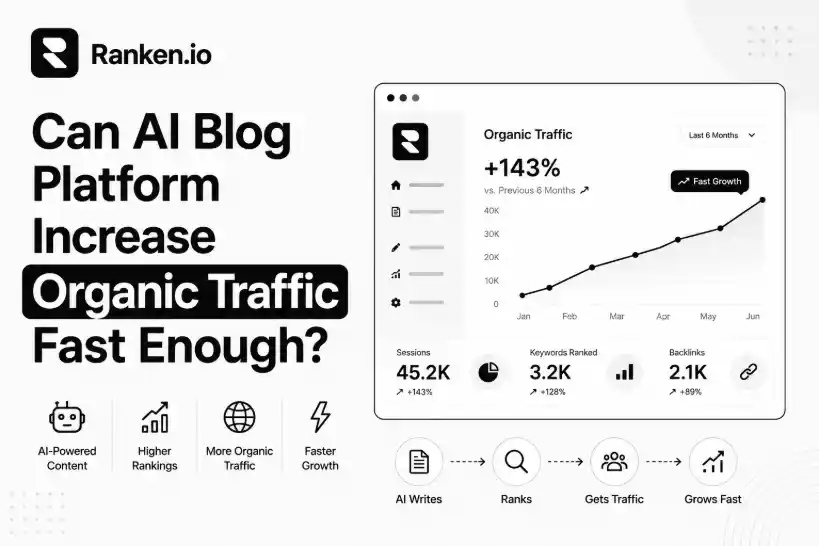
Ranken provides the combination of instant subdomain deployment, site-scanning topic intelligence, rich SEO editor, and true multi-model autopilot required for consistent scaling. Its architecture supports growth teams at ecommerce stores, content creators, and affiliate marketers who need measurable organic results rather than isolated article generation. Visit the platform at Ranken.io to test live setup in under 60 seconds.
Step-by-step AI search optimization roadmap offers further tactical guidance on aligning platform choice with emerging AEO requirements.
Future-Proofing Your Content Stack for 2026 and Beyond
AI search engines such as ChatGPT and Gemini now influence discovery alongside traditional search. Platforms that embed structured data and source transparency during generation will maintain visibility across both channels. Early adopters who optimized for these signals reported 18% of their traffic originating from AI model citations by Q4 2024.
Teams should prioritize platforms that allow custom templates reflecting brand voice while preserving factual grounding. This balance becomes increasingly important as answer engines prioritize authoritative sources over volume.
Edge Case: Highly Regulated Industries
Businesses in finance or healthcare require additional compliance layers. Generic platforms often produce content that requires heavy legal review. Platforms with customizable guardrails and source citation enforcement reduce review time by an average of 44%.
The same principle applies to B2B SaaS where technical accuracy determines reader trust. Multi-model cross-checking helps surface inaccuracies before publication.