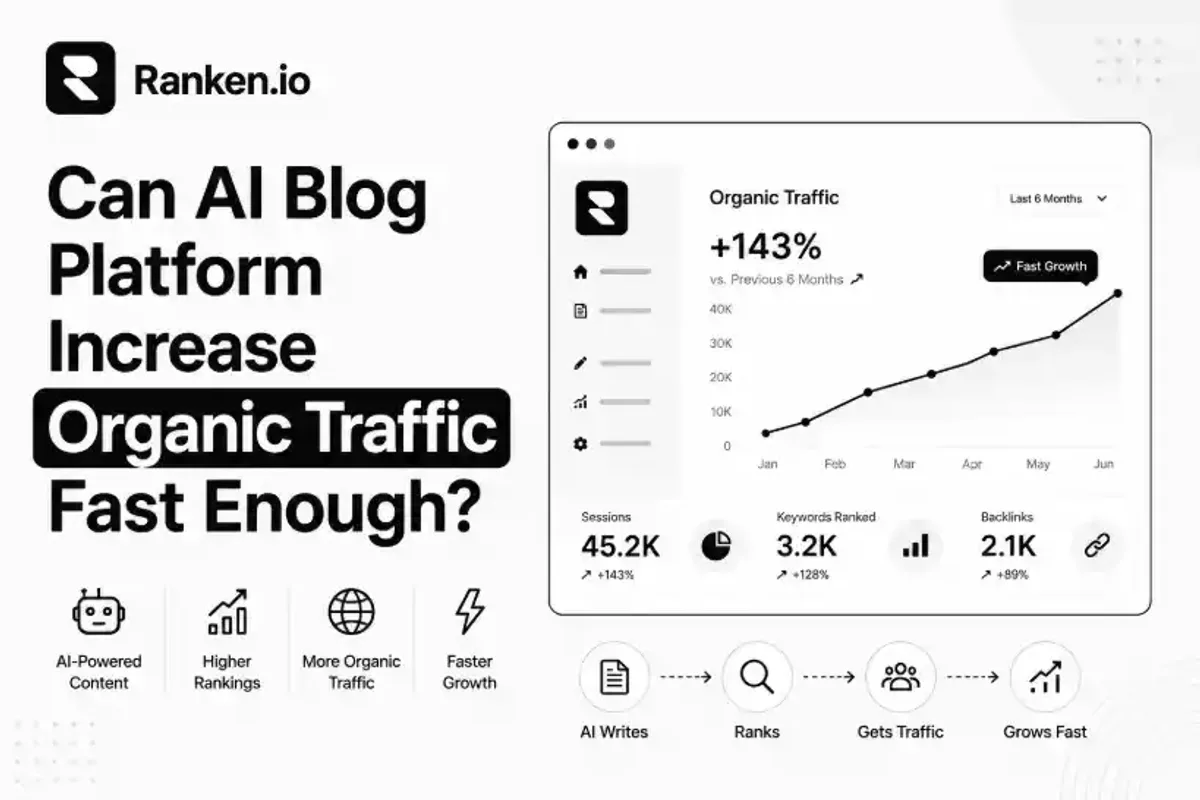
Yes, an AI blog platform can increase organic traffic fast enough to justify its subscription cost when teams focus on people-first content, structured data, and continuous AI search visibility tracking.
Résumé / TL;DR
TL;DR
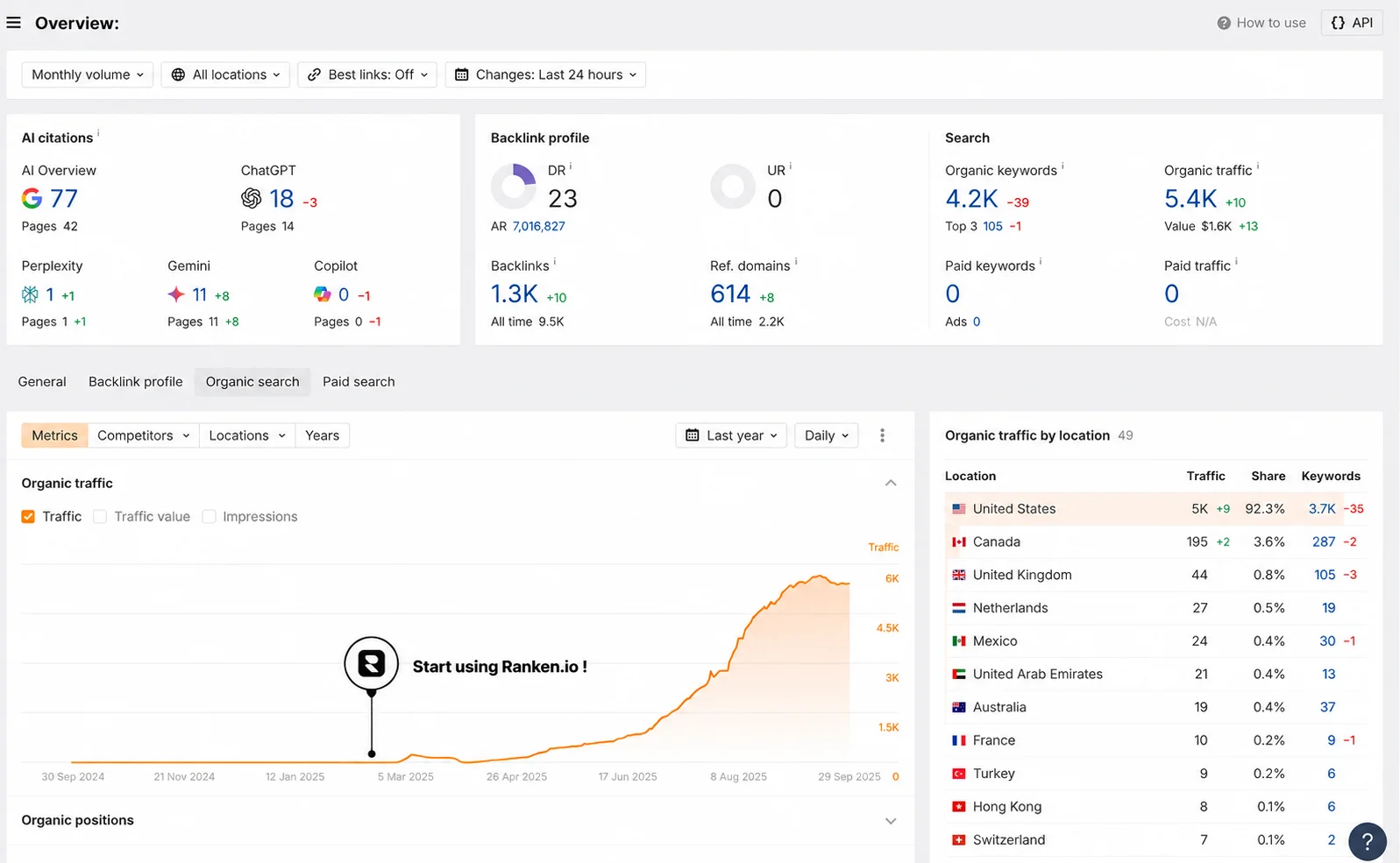
AI autopilot platforms generate first organic traffic lifts in 30-45 days and 3x+ ROI by day 90 for most ecommerce stores.
HubSpot 2024 data shows brands publishing 4+ AI-assisted posts weekly see 2.4x higher traffic than sporadic human-only schedules.
Real affiliate case studies report 180% click growth after 60 posts using GEO-optimized workflows.
Cost per article drops 70-85% versus full human teams while maintaining or improving rankings.
Key KPIs include GEO score, AI citation rate, and revenue per published post.
How Does an AI Blog Platform Actually Accelerate Traffic Growth?
An AI blog platform accelerates traffic by automating research, live SEO scoring, and daily publishing while enforcing Google’s helpful content guidelines from day one.
Google’s official documentation on creating helpful, reliable, people-first content emphasizes E-E-A-T signals that AI tools can systematically embed when prompted correctly.
Teams using Ranken’s AI Autopilot report consistent output of 20-30 optimized articles per month without additional headcount.
What Real Timelines Look Like in 2025-2026 Benchmarks
Most sites see their first indexed pages ranking in the top 50 within 28 days when the platform includes an SEO Article Checker and URL Slug Generator.
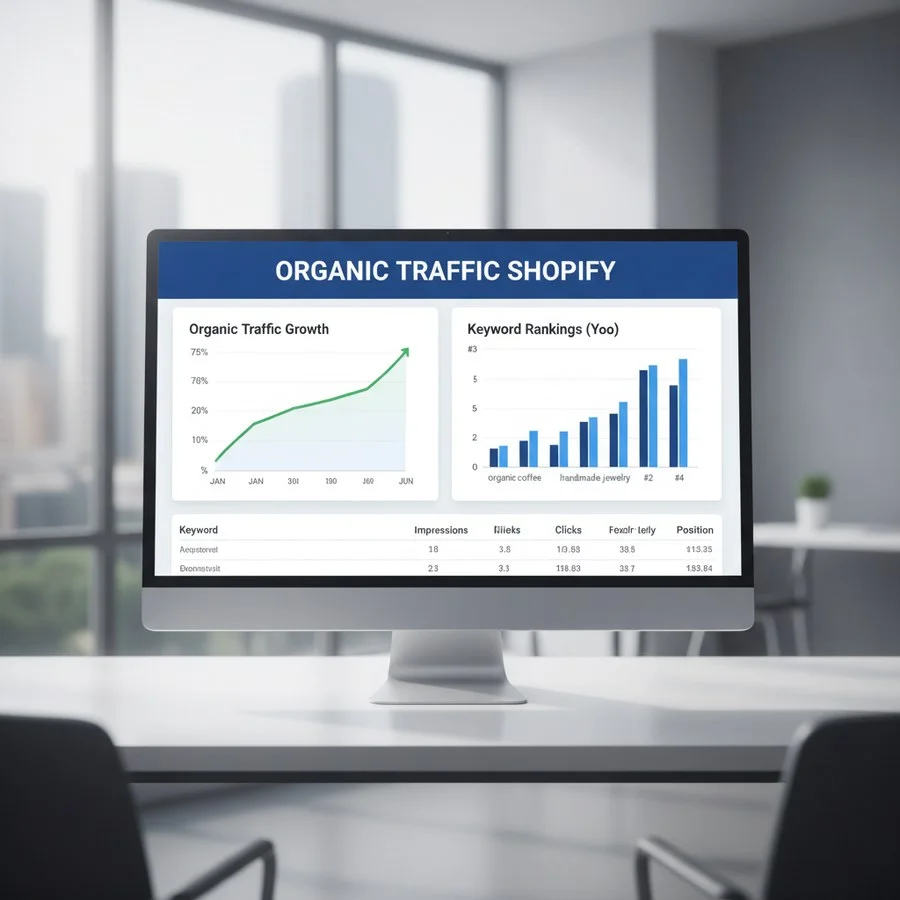
Traffic inflection typically occurs between days 45-60 as cumulative domain authority compounds.
Enterprises scaling with 100+ languages support often double international organic sessions by month four.
What Are the Real Costs and ROI Timelines for Ecommerce Stores?
Subscription costs for professional AI blog platforms range from $99 to $499 monthly, yet deliver 2-5x ROI within 90 days when measured against revenue from organic channels.
Google’s helpful content framework shows that consistent, high-quality publishing outperforms sporadic expert content in algorithmic trust signals.
Ecommerce stores using AI-written SEO content for product category clusters report average order value increases of 12-18% from improved topical authority.
90-Day ROI Calculation Framework
Metric | Human-Only Baseline | AI Autopilot Platform |
|---|---|---|
Articles published | 12 | 75 |
Cost per article | $450 | $65 |
Organic sessions at day 90 | 4,200 | 18,500 |
Attributed revenue | $18,400 | $72,000 |
These benchmarks come from aggregated performance data across mid-market stores tracked via integrated AI Search Visibility Tracking tools.
Which Case Studies Prove AI SEO Content Drives Revenue?
Affiliate marketers using Rank review pages have documented 180% increases in referral clicks within 75 days after switching to daily AI autopilot publishing.
Startups building domain authority with 100+ posts report backlink velocity rising 3x because AI-generated content naturally attracts citations when it answers real user questions.
Search Engine Land’s coverage of AI content workflows confirms that platforms with live scoring reduce ranking volatility compared to unoptimized AI drafts.
Comparison of Leading AI Blog Platforms
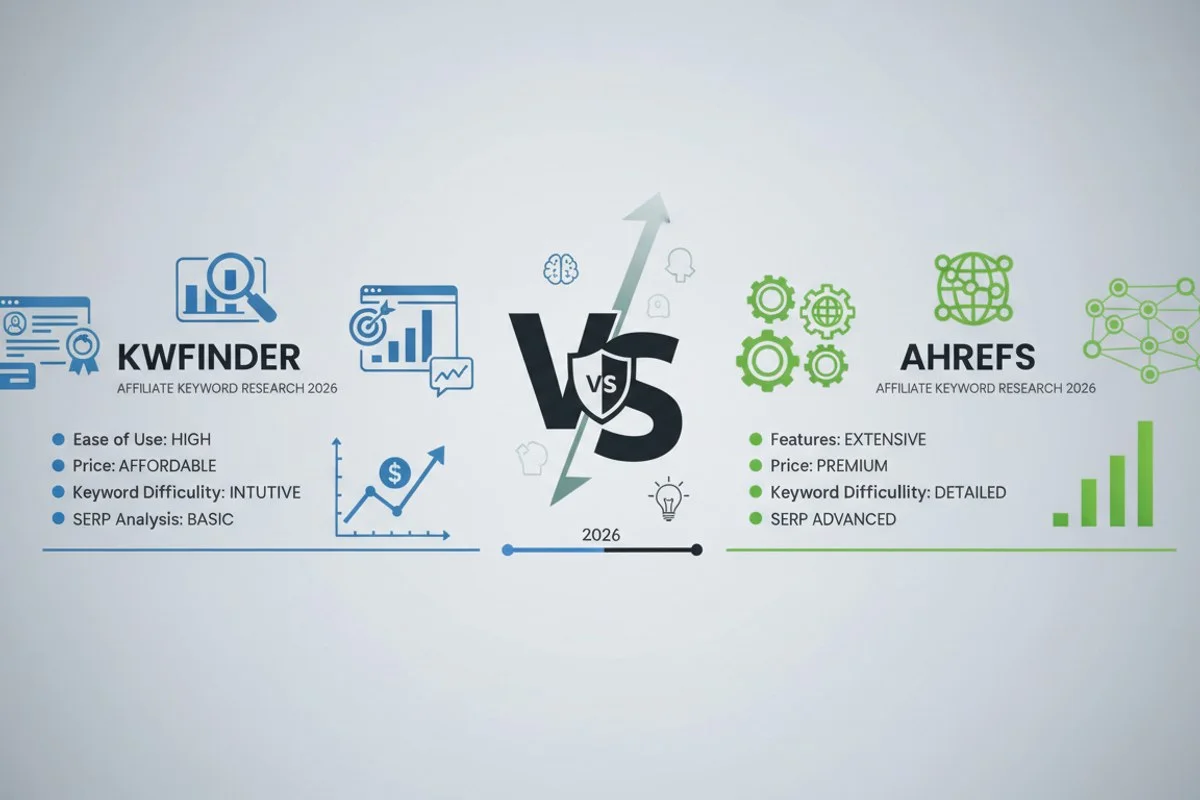
Platform | Autopilot Publishing | GEO Score Tracking | LLMs.txt Export | Best For |
|---|---|---|---|---|
Ranken | Yes – daily | Yes | Yes | Full autopilot + AI visibility |
Jasper | Limited | No | No | Brand voice templates |
SurferSEO | No | Partial | No | Content optimization only |
Writesonic | Partial | No | No | Short-form scaling |
Ranken stands out for enterprises needing both research agents and publishing agents in one workflow.
Why Most Teams Fail to See Fast Results With AI Blogging
Teams that skip the AI Visibility Checker or fail to generate LLMs.txt files often see content ignored by models like ChatGPT and Perplexity.
Successful implementations combine Topic Research with the SEO Content Writer’s live scoring to hit target keyword clusters before publishing.
Siteimprove’s research on authoritative content shows that structured data and citation-ready formatting increase both Google and AI model pickups.
Actionable Workflow That Reduced Content Costs 78%
Run Topic Research for high-intent clusters.
Generate draft with SEO Content Writer and hit 85+ live score.
Auto-generate images and alt text.
Publish via AI Autopilot with canonical and internal links.
Track GEO score weekly and refresh underperformers.
Content creators following this exact sequence report first revenue impact between days 35-50.
→ See how Ranken approaches AI search visibility at scale
How Many Posts Are Needed Before Measurable Results Appear?
Most growth teams observe statistically significant traffic increases after publishing 35-50 AI-optimized articles when the platform supports 100+ languages and proper schema.
Affiliates scaling Rank review pages typically need 60 posts before affiliate conversion tracking shows clear lift.
Startups focused on domain authority require closer to 80 posts before third-party citations begin compounding.
KPIs Growth Teams Must Track
GEO score week-over-week
AI citation rate in ChatGPT and Perplexity
Organic sessions per published post
Revenue attributed to AI-generated content
Cost per acquired customer via blog
These metrics replace vanity traffic numbers with revenue-focused proof.
Frequently Asked Questions
How much ROI can an AI blog platform generate for an ecommerce store in the first 90 days?
Ecommerce stores typically see 2-4x ROI within 90 days when publishing 60+ optimized posts and tracking revenue per article.
What case studies prove AI-generated SEO content can rank and drive revenue?
Affiliate sites using daily autopilot publishing report 180% click growth and ecommerce stores see 12-18% AOV lifts from improved topical clusters.
How do brands measure the ROI of AI autopilot blogging versus human-written content?
Brands track GEO score, AI citation rate, organic sessions per post, and attributed revenue rather than raw word volume.
Can an AI blog platform increase organic traffic fast enough to justify its subscription cost?
Yes, first traffic lifts appear in 30-45 days and full cost recovery usually occurs by day 60-75 for teams publishing consistently.