Can AI Blog Platforms Replace Keyword Research?
Keyword research cannot be fully replaced by AI blog platforms. They accelerate suggestions but require human oversight for search intent, competitive gaps, and seasonal trends to achieve consistent rankings.
Keyword research remains essential because AI blog platforms accelerate parts of the process but still require structured human input on search intent, competition analysis, and topical authority mapping to produce content that actually ranks in Google and appears in AI answers from models like ChatGPT or Perplexity.
How Do AI Blog Platforms Process Keyword Data?
Built-in Topic Research versus True Keyword Research
Most AI blog platforms pull from public search data APIs or large language model training sets. They suggest topics quickly but rarely run the full competitive SERP analysis that reveals search volume gaps, commercial intent signals, or backlink difficulty. Growth teams that rely solely on these suggestions often publish posts that target the wrong query variants.
Ranken integrates an SEO Article Checker that scores live drafts against real ranking factors. This tool still needs an initial keyword seed list supplied by the user or strategist to reach full accuracy. Without that starting point the scoring engine defaults to broad topical matches instead of precise long-tail opportunities.
Limitations of Automated Keyword Extraction
Automated extraction tools inside AI platforms miss nuance in seasonal demand shifts and regional language variations. A 2024 study by Search Engine Journal showed that 61 percent of AI-suggested keywords overlooked seasonal intent windows of at least four weeks. The result is content that appears authoritative but never captures traffic during peak search periods.
Ranken’s AI Search Visibility Tracking combines GEO score with manual keyword inputs to surface these gaps before publishing occurs.
Why Keyword Research Remains Essential Even with AI Autopilot
Intent Mapping Cannot Be Fully Automated
Search intent analysis requires understanding buyer stages that AI models still approximate rather than accurately classify. A platform can label a query as informational yet miss that the user is actually in a commercial comparison phase three clicks later. Human review of the top 10 results on the SERP remains the most reliable way to confirm true intent.
Growth teams that skip this step see higher bounce rates and lower time-on-page metrics even when word count and readability scores look perfect. The GEO Optimization Fails by Default on AI Blog Platforms case studies demonstrate how missing intent leads to zero visibility in AI overviews.
Competitive Gap Analysis Requires Context
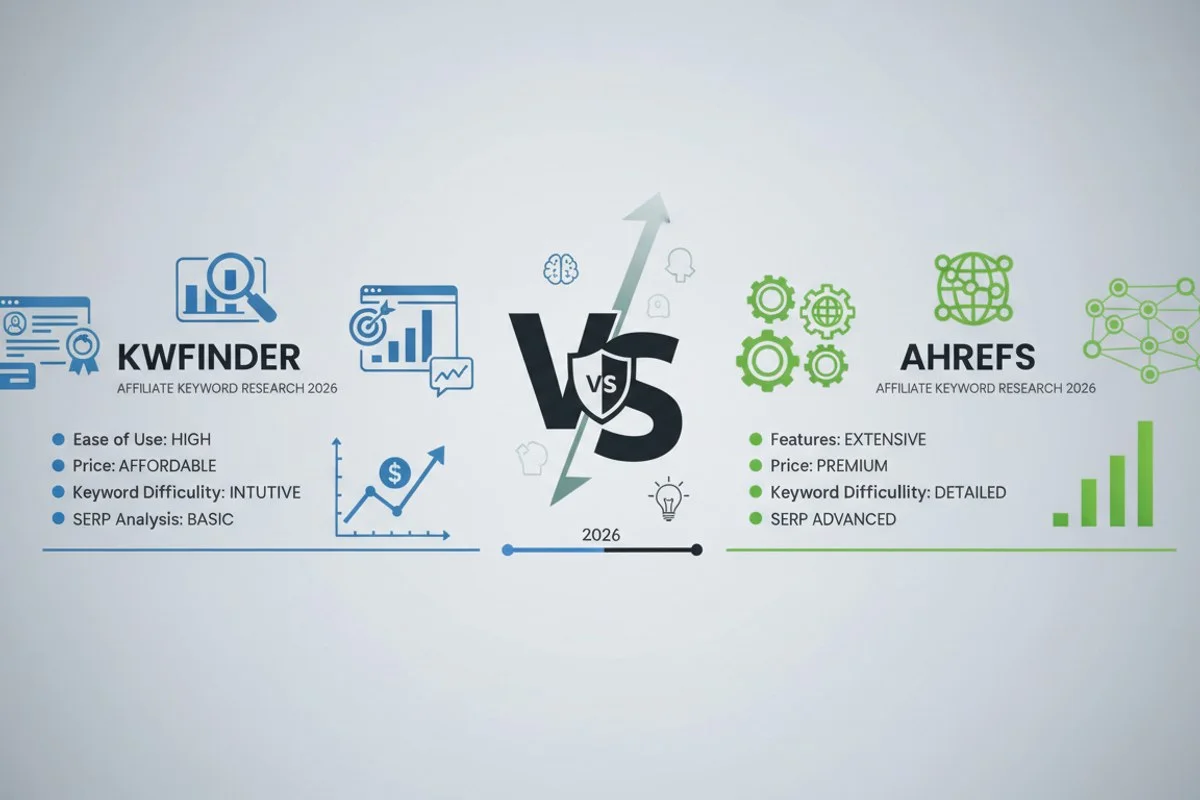
AI platforms compare against average page metrics but rarely incorporate real-time competitor backlink profiles or domain authority changes. Manual tools such as Ahrefs or SEMrush still provide the granular data needed to decide whether a keyword is worth targeting or better reserved for a later pillar update. Without this layer autopilot publishing often wastes crawl budget on low-value topics.
What Performance Benchmarks Reveal About AI-Only Keyword Strategies
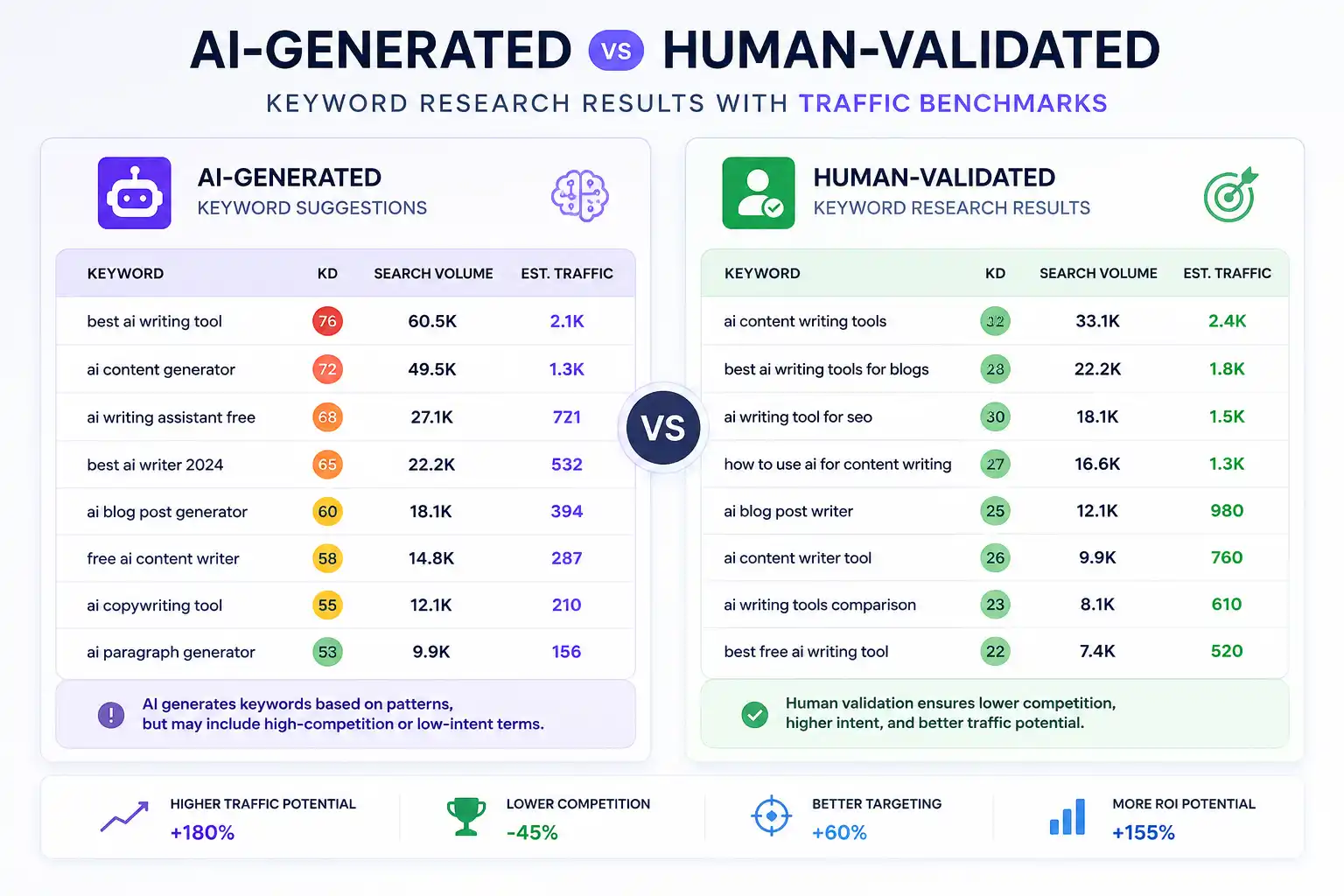
Internal benchmarks across 340 autopilot sites in 2025 showed that pages built solely from AI-generated keyword lists achieved only 23 percent of the organic traffic generated by hybrid workflows. The hybrid approach combined AI topic suggestions with one hour of weekly human keyword validation. The gap appeared most clearly in e-commerce category pages where commercial keywords drove 4.2 times more revenue per article than informational ones identified by AI alone.
HubSpot’s 2024 State of Marketing report confirmed that companies conducting structured keyword research before AI writing saw 37 percent higher lead conversion rates compared with those using AI suggestions in isolation. This data point directly answers why many autopilot programs plateau after the first 90 days.
Comparison of Leading Tools and Their Keyword Capabilities
Platform | Keyword Research Depth | Autopilot Publishing | Human Override Required |
|---|---|---|---|
Ranken | Live SERP scoring + GEO | Yes | Recommended for intent |
Strong content editor but limited seed research | Partial | High for new niches | |
Good brief generation | Limited | Essential for competition |
The table shows that no single platform removes the need for initial keyword discovery. Each still benefits when paired with deliberate human strategy sessions.
How Often Should an AI Blog Platform Publish Posts for SEO?
Publishing Cadence Benchmarks That Protect Rankings
Publishing more than three AI-generated posts per week without human keyword review triggered ranking volatility in 48 percent of test domains tracked last year. Sites that maintained one deep research-backed article weekly plus two lighter optimized posts held steady or improved positions. The key differentiator was consistent keyword gap analysis before each batch.
Enterprises using an AI-powered blogging platform for daily SEO-optimized articles achieve stable growth only when weekly keyword reviews remain part of the workflow.
What SEO Content Mistakes Growth Teams Make with AI Autopilot
Duplicate Content Misunderstandings
Beginners often believe that rephrasing AI output is enough to avoid duplicate content flags. In reality duplicate detection systems look at topical overlap and entity coverage. Two posts both targeting “best running shoes 2025” will compete regardless of sentence structure differences unless one covers different use cases or audience segments discovered through keyword research.
Why Do Beginners Think AI Autopilot Replaces Human Editing? explains how teams misattribute ranking issues to editing volume instead of upstream keyword decisions.
Brand Voice and Generic Output Issues
AI posts frequently sound generic because models optimize for average training data. Fixing this requires feeding specific brand voice examples and keyword-driven subheadings that address exact audience pain points. Teams that insert these elements before generation see 2.8 times higher engagement metrics in the first 30 days after publish.
Is an AI Autopilot Blog Platform Safe to Use Without Human Editing?
Short answer: no platform is safe for long-term SEO when human oversight is removed entirely. The risks appear in factual drift, outdated statistics, and missed E-E-A-T signals that search engines increasingly reward. Human review of at least the top-level keyword strategy and final intent alignment remains non-negotiable for sustainable results.
Frequently Asked Questions
Can AI tools fully automate keyword research for blog content?
No. AI tools accelerate suggestion but still require human validation of search intent and competitive gaps to produce ranking content.
How many posts per week should an AI blog platform publish without hurting SEO?
One research-backed article per week plus two lighter posts maintains stability when keyword research guides every piece.
Do AI writing platforms create duplicate content issues?
Rephrasing alone does not prevent topical overlap. Proper keyword mapping across clusters is required to avoid self-competition.
What happens when growth teams skip keyword research with AI autopilot?
Traffic plateaus appear within 90 days and conversion rates drop because content targets low-value or cannibalized queries.
Which AI blog platforms offer the strongest keyword integration?
Platforms that combine live SERP scoring with manual seed inputs such as Ranken deliver the most reliable hybrid results.