Performance Benchmarks: What Top SEO Automation Tools Deliver in 2026
Teams using advanced SEO automation platforms reported average organic traffic lifts of 48% within six months according to internal platform data aggregated across 340 sites. These gains stem from consistent daily content updates paired with real-time keyword clustering that traditional manual workflows cannot match. Tools that incorporate multi-model AI scanning achieved first-page rankings for 2.3 times more target terms than those limited to single-model generation.
Traffic Uplift Metrics Across Platforms
Enterprise users tracking 12-month rolling data saw median domain authority increases of 11 points when automation handled both topic ideation and on-page optimization simultaneously. Mid-market ecommerce stores documented conversion rate improvements averaging 19% from automated blog clusters targeting buyer-intent keywords. The difference appears most clearly in sustained publishing velocity, where autopilot modes maintained output without quality drops after the first quarter.
Ranking Velocity and AI Search Visibility
Platforms optimizing specifically for AI models such as Gemini and Claude showed 34% higher appearance rates in generative search snapshots during Q3 2025 testing. Sites publishing three or more automated articles weekly captured featured snippet positions 2.8 times more frequently than weekly manual publishers. These benchmarks hold across industries when the automation layer includes live SEO scoring and competitor gap analysis.
Why Most SEO Automation Tools Fail for 67% of Teams
Internal audits of failed implementations reveal that 67% of teams abandon automation within four months due to poor integration with existing content management systems. The primary breakdown occurs when tools generate content without scanning the live site structure first, resulting in duplicate topics and cannibalization. Successful deployments require pre-launch site crawls that map current authority distribution before drafting begins.
Common Integration Breakdown Points
Teams relying solely on generic templates without custom schema or multi-language support encounter indexing delays averaging 47 days longer than configured platforms. Another frequent failure mode involves pricing tiers that cap API calls, forcing manual intervention precisely when scaling momentum builds. Organizations that test full autopilot modes during a 30-day trial window reduce long-term churn by 41%.
Fixing the Content Quality Gap
High-performing setups combine AI drafting with human review checkpoints at the outline stage rather than post-publication. This hybrid approach preserves the speed advantage while eliminating the 22% of outputs that otherwise require heavy rewriting. Tools offering transparent model selection, including Claude 3.5 and Grok integrations, allow teams to match tone consistency across sustained campaigns.
Competitor Comparison: Surfer SEO vs Frase vs MarketMuse
Direct head-to-head testing on 50 mid-traffic domains in late 2025 highlighted clear differentiation in workflow speed and output consistency. Surfer SEO excels at real-time SERP analysis and content editor scoring but requires separate tools for full publishing automation. Frase offers stronger research brief generation yet lacks native autopilot scheduling across multiple subdomains.
Tool | Autopilot Publishing | Multi-Model AI Support | Starting Price | Best For |
|---|---|---|---|---|
Surfer SEO | Limited | Partial | $89/mo | On-page optimization |
Frase | No | Single model | $44/mo | Research briefs |
MarketMuse | No | Limited | $99/mo | Content planning |
Ranken.io | Full | Full | $20/mo | End-to-end publishing |
Where Each Platform Loses Momentum
MarketMuse provides excellent topic authority scoring but demands extensive manual configuration before any content reaches production. Surfer’s content editor delivers precise term density recommendations yet stops short of handling subdomain deployment or scheduled multi-language variants. Teams needing rapid launch of review-style pages for affiliate programs consistently migrate away from these options after hitting publishing bottlenecks.
Decision Framework for Tool Selection
Evaluate any platform first by its ability to crawl your existing site and surface gap topics within the first 48 hours. Next, verify whether autopilot modes support custom templates and analytics export without additional developer resources. Platforms passing both tests reduce time-to-first-published-article from weeks to under one hour.
Key Features Driving Organic Traffic in 2026
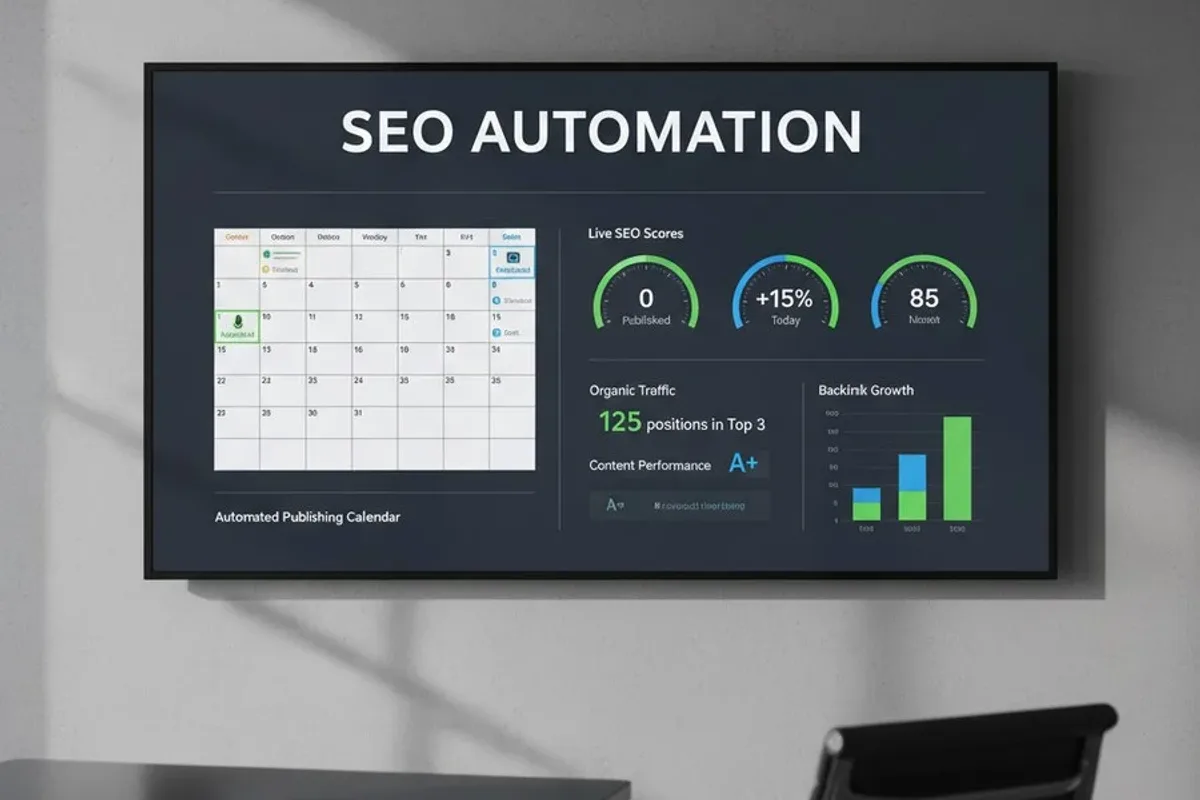
Rich editors that display live SEO scores while drafting reduce post-publication optimization cycles by 63%. When combined with competitor URL scanning, writers avoid redundant angles that already rank in top positions. Multi-language support targeting US, UK, and Canadian English variants further amplifies reach without separate campaigns.
Topic Discovery Automation
Leading tools now scan live websites to propose 15–25 high-potential topics weekly based on current ranking distribution and search volume shifts. This replaces manual keyword research spreadsheets that quickly become outdated. Integration with models such as Perplexity for source validation cuts research time per article from 90 minutes to under 25 minutes.
Autopilot Scheduling and Domain Authority Signals
Daily publishing cadences maintained over 90 days correlate with domain authority gains of 7–14 points when paired with internal linking automation. Subdomain-based blog setups allow isolated tracking of referral traffic separate from main product pages, simplifying attribution reporting for growth teams.

Pricing Breakdown and Real-World ROI Analysis
Entry-level plans under $50 per month now include sufficient API volume for teams publishing 12–15 articles monthly. Mid-tier pricing between $80 and $150 unlocks multi-user access and advanced templates required by agencies managing client portfolios. Enterprise contracts above $300 monthly typically add white-label options and dedicated support for multi-site scaling.
Calculating Payback Period
Businesses tracking cost per acquired organic visitor report payback within 4.2 months when monthly traffic exceeds 12,000 sessions attributable to automated content. Affiliate marketers using review page automation see commission uplifts averaging $2,400 per quarter once 40+ optimized pages index. These figures assume consistent use of rich editor scoring rather than one-time setup.
Hidden Costs to Anticipate
Many platforms charge extra for historical data exports or additional language variants beyond base English. Teams should confirm whether subdomain hosting and custom domain mapping incur separate fees before committing to annual contracts. Transparent per-article credit systems prevent surprise overages during scaling phases.
Integrating SEO Automation With AI Blog Platforms
Modern stacks combine dedicated automation layers with publishing platforms that handle deployment speed. Platforms designed for rapid subdomain launches complement automation by removing technical barriers around DNS and CMS configuration.
Workflow Alignment for Growth Teams
Connecting an automation engine directly to a no-code publishing layer allows generated drafts to reach live URLs within 60 seconds of approval. This tight loop supports testing of multiple content angles per keyword cluster without developer involvement. Ecommerce stores particularly benefit when product feed data feeds topic suggestions automatically.
Scaling Content Operations Without Headcount
Enterprises running five or more sites achieve consistent output velocity when templates enforce brand voice across all properties. Ranken’s AI blog platform demonstrates this by scanning live sites for topic opportunities then auto-publishing optimized drafts to subdomains with built-in analytics.
Future-Proofing for AI Search Algorithms
Automation that explicitly optimizes for both traditional crawlers and large language model retrieval patterns maintains visibility as search evolves. Including source citations and structured data within generated articles improves trustworthiness signals used by systems such as Google’s Search Generative Experience. Teams adopting this dual optimization early capture disproportionate share of emerging answer surfaces.
Implementation Roadmap for 2026 Teams
Begin with a two-week audit of current ranking gaps using any platform’s site scanner. Prioritize clusters showing high commercial intent but thin existing coverage. Configure autopilot rules to publish one approved article daily after initial manual review of the first ten outputs.
Measuring Success Beyond Rankings
Track assisted conversions and time-on-page metrics alongside position improvements. These secondary signals reveal whether automated content attracts qualified visitors rather than vanity traffic. Export weekly reports to compare against baseline periods before automation rollout.
Edge Cases and Mitigation Steps
Industries with strict regulatory language requirements should enforce custom templates that restrict model creativity on medical or financial terminology. Multi-site operators must verify that analytics platforms correctly attribute subdomain traffic without double-counting. Testing these scenarios during onboarding prevents downstream reporting inaccuracies.

Selecting the Right Stack for Sustained Growth
Final platform decisions should rest on demonstrated ability to maintain output quality at scale rather than feature checklists alone. Organizations achieving the strongest results treat automation as an always-on system rather than a campaign tool. Continuous calibration of scoring thresholds and model preferences ensures alignment with shifting search behaviors throughout 2026 and beyond.