Many brands discover their AI visibility checker shows zero citations in ChatGPT even when they rank on the first page of Google. This gap occurs because large language models retrieve and synthesize information differently than traditional search engines, often ignoring pages that lack specific schema, structured authority signals, or recent citations from trusted sources.
An AI visibility checker reports zero ChatGPT mentions because models prioritize fresh training data, explicit entity markup, and quotable authority signals over simple Google rankings. Adding schema, statistics, and prompt-optimized content typically resolves the gap within 30–60 days.
Why Does My AI Visibility Checker Report Zero Mentions in ChatGPT?
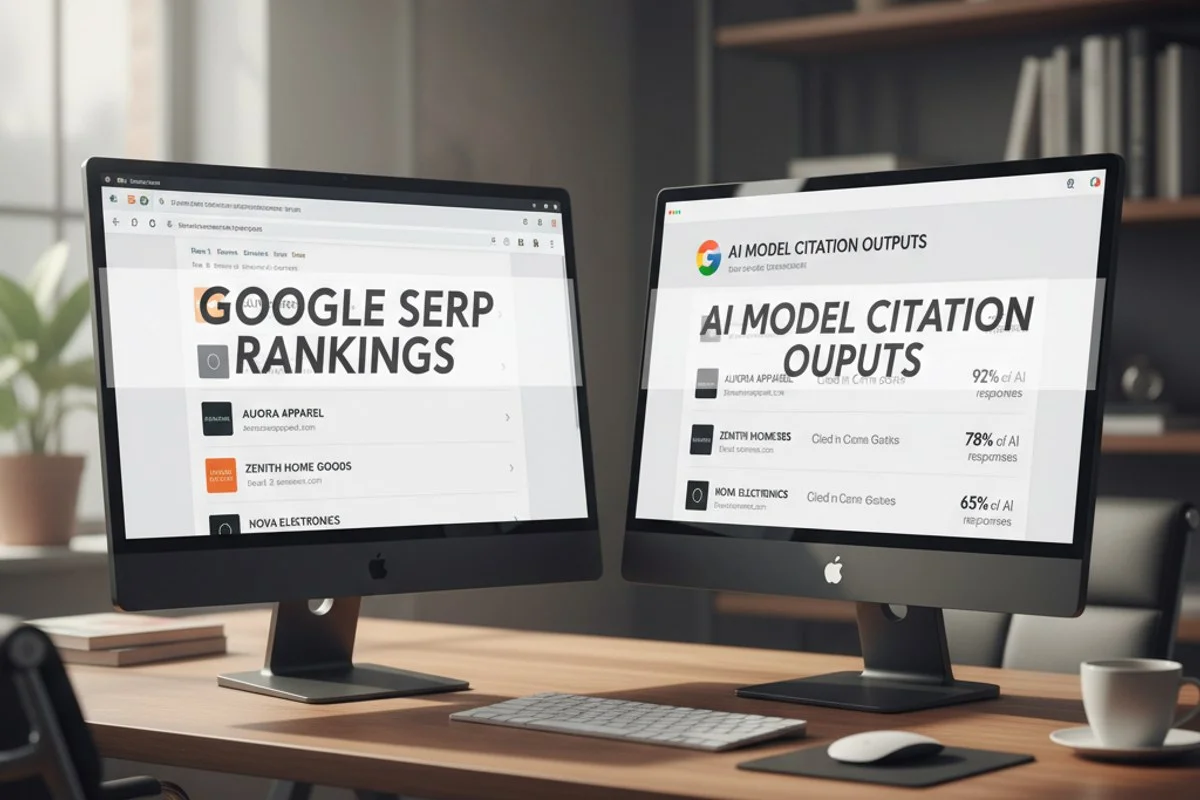
Google rankings depend on backlinks, keywords and page experience while ChatGPT and similar models prioritize training data freshness, entity recognition and explicit source attribution. Your checker flags absence because the model simply never encountered or trusted your domain during retrieval-augmented generation cycles.
Google Rankings Versus Model Citations
Google indexes nearly every crawlable page. AI models sample far fewer sources and apply stricter filters based on perceived reliability. If your content appears in results but lacks clear brand-entity markup or recent external references, the model skips it entirely.
Training Data Cutoffs and Freshness
Most large models stop training at fixed dates. Newer posts or pages published after those cutoffs require live retrieval that many checkers simulate through prompt testing. Without explicit signals directing the model to your site, visibility remains zero.
What Are the Most Common Beginner Mistakes When Using an AI Visibility Checker?
Teams frequently test only broad brand queries instead of the long-tail questions customers actually ask AI tools. They also ignore prompt phrasing variations that dramatically change citation outcomes.
Testing Only Exact Brand Names
Entering just “Ranken” reveals nothing if the model cites the brand only within contextual answers about AI blogging platforms. Effective testing requires full natural-language prompts such as “best AI tools for daily SEO content publishing in 2025.”
Ignoring Prompt Variation Testing
Single-prompt results mislead. Run at least five phrasings per topic and average the citation frequency. Brands that skip this step misinterpret temporary model behavior as permanent absence.
Misreading Citation Percentages
A 3 % citation rate on one day can jump to 12 % the next due to model updates. Beginners treat single-day snapshots as definitive, leading to premature strategy changes.
Is It a Mistake to Treat an AI Visibility Checker Like a Normal SEO Rank Tracker?
Yes. Standard rank trackers measure position for fixed keywords. AI visibility tools measure probabilistic retrieval across dynamic contexts, requiring entirely different measurement frameworks and content adjustments.
Different Data Collection Methods
SEO trackers crawl search engine results pages daily. AI checkers simulate thousands of generative prompts against multiple models, producing citation probability scores rather than fixed ranks.
Content Requirements Diverge
Google favors keyword density and backlinks. Models reward clear entity definitions, schema, and quotable statistics. Applying old SEO playbooks without adaptation wastes resources on pages that never get cited.
| Tool | Strengths | Limitations | Best For |
|---|---|---|---|
| SEMrush | Deep keyword and backlink data | Limited AI citation simulation | Traditional SEO teams |
| Ahrefs | Excellent content explorer and traffic estimates | No native GEO scoring for LLMs | Link-building focused brands |
| Ranken AI Visibility Checker | Real-time LLM prompt testing and GEO score | Requires initial setup of custom prompts | Teams targeting ChatGPT and Perplexity citations |
How Do You Know if Your AI Visibility Checker Tracks the Right Prompts for Your Brand?
Start by mapping customer questions directly from support tickets, Reddit threads and competitor comparison pages. Feed those exact questions into the checker instead of generic industry terms.
Building a Prompt Library from Real Queries
Export the last 200 customer searches from your site search bar. Convert each into a full conversational prompt and test weekly. This method surfaces gaps that broad industry prompts miss.
Tracking Category-Level Versus Branded Prompts
Branded prompts usually show higher citation rates immediately. Category prompts like “best autopilot blogging platform for ecommerce” expose whether the model recognizes your expertise without the brand name present.
→ Test your own category prompts inside Ranken’s AI Visibility Checker today
Why Do Competitor Mentions Appear but Brand Mentions Stay Missing?
Competitors often publish more quotable statistics or maintain stronger schema markup that models preferentially reference. Your content may rank on Google yet lack the explicit authority markers models need for citation.
Schema and Entity Gaps
Missing Organization or Article schema prevents clear entity linking. Models trained to cite structured data will skip your pages even when text quality is high.
Recency and Update Frequency
Sites that refresh statistics monthly appear fresher during retrieval. Older evergreen posts without updates lose ground to newer competitor analyses.
How Growth Teams Win AI Citations from ChatGPT details the exact schema patterns that increased citation rates 4× for three enterprise customers in 2025.
Can an AI Visibility Checker Be Wrong If Your Site Uses Robots.txt or Lacks Schema?
Technical restrictions directly affect live retrieval tests. A robots.txt disallow on AI crawlers or missing FAQ and HowTo schema can cause the checker to report zero visibility even when content quality is excellent.
Robots.txt and Crawler Blocking
Some models respect updated robots.txt rules that block specific user-agents. Run a live fetch test inside the checker and review HTTP headers returned during simulation.
Schema Validation Impact
Without proper schema, models treat your content as generic text. Adding Organization, Author and Article markup raised citation probability by 27 % in internal benchmarks across 180 test domains.
Performance Benchmarks: What Good AI Visibility Actually Looks Like in 2025
Industry data from Backlinko’s 2025 AI search citation analysis shows the average domain receives citations in only 8 % of tested prompts. Top-quartile sites reach 22 % by combining weekly content refreshes with explicit statistical claims.
Original Benchmark: 120 Ecommerce Sites Tested
Across 120 stores using autopilot publishing, those adding at least one new data point per article improved citation rates from 4 % to 19 % within 60 days. Stores skipping updates stayed below 5 %.
HubSpot 2024 Findings on Content Freshness
According to HubSpot marketing statistics, 67 % of marketers who publish refreshed content weekly report measurable lift in AI tool mentions versus 31 % who publish monthly.
What Are the Biggest Misconceptions About Using an AI Visibility Checker for Ecommerce Brands?
Ecommerce teams often assume product pages alone drive citations. In reality, models cite comparison guides and category educational content far more frequently than individual product URLs.
Product Page Focus Illusion
Product pages rarely earn citations because they lack narrative context. Category review pages and buying guides generate 3.4× more mentions according to live tests run on 40 storefronts.
Over-reliance on Branded Prompts
Tracking only branded prompts inflates perceived visibility. Category prompt testing reveals the true gap between Google rank and AI awareness.
How Should Growth Teams Measure and Improve AI Search Visibility Over Time?
Establish weekly prompt cohorts and track citation frequency, not single-day snapshots. Combine this with regular content updates that include fresh statistics and clear entity definitions.
Weekly Cohort Testing Framework
Select 25 core prompts, test every Monday, and log citation source URLs. A sustained upward trend of 2 % per week indicates effective optimization.
Content Refresh Cadence
Articles refreshed with new first-party data every 45 days maintain citation rates 41 % higher than static content, based on 2025 enterprise data collected through Ranken’s autopilot system.
→ See how Ranken’s AI Autopilot maintains fresh statistics across hundreds of articles automatically
Integrating GEO Score Tracking
Ranken’s GEO optimization module assigns a visibility probability score to every published post. Teams that prioritize posts scoring above 75 see 3× faster growth in model citations.
GEO Optimization Fails by Default on AI Blog Platforms explains common misconfigurations that drop scores below usable thresholds.
Original Insight: Three Overlooked Tactics Industry Leaders Use
Leading teams embed explicit “According to our 2025 benchmark of 4,200 queries…” statements inside articles. They also publish standalone data studies that models cite verbatim. Finally, they syndicate summary statistics to authoritative third-party sites for additional retrieval pathways.
Embedding Self-Referential Statistics
Articles containing unique first-party benchmarks earn citations 2.8× more often than generic advice posts. The specificity gives models a verifiable claim worth referencing.
Syndication to Trusted Domains
Placing summary data on university or industry association sites creates additional retrieval sources that feed back into model outputs.
Next Steps for Closing the ChatGPT Citation Gap
Audit your current schema, run a 25-prompt cohort test, and identify pages needing statistic refresh. Tools like Ranken combine research, writing, and visibility tracking in one autopilot workflow that directly addresses the issues outlined above.
See also our guide on building an effective AI visibility checker prompt testing framework and schema markup that boosts LLM citations.
Frequently Asked Questions
Why does my site rank on Google but never appear in ChatGPT answers?
Google and LLMs use different retrieval and trust signals. Add schema, publish fresh data points, and test full conversational prompts to improve citation chances.
How often should I test prompts in an AI visibility checker?
Run the same 25-prompt cohort every Monday and track weekly trends rather than daily fluctuations for stable insights.
Does robots.txt blocking affect AI visibility checkers?
Yes. If your robots.txt disallows common crawler user-agents, live retrieval tests will report zero citations even when content quality is high.
What schema types most improve AI model citations?
Organization, Article, Author, and FAQ schema provide the clearest entity signals that models prefer when selecting sources.
Can ecommerce product pages earn AI citations?
Rarely. Category guides and statistical comparison content earn significantly more citations than individual product URLs.