Map buyer intent before writing a single word
Affiliate review pages convert when the content matches exact search-stage questions. In 2026, run your target queries through an AI keyword cluster tool to surface the 8-12 long-tail variations that appear in the top 30 results. Target phrases with 300-800 monthly searches and question format. This single step lifts click-through from comparison pages by 18-25% within 60 days because readers arrive already evaluating options rather than still researching basics.
Structure comparison tables that guide decisions
Readers scan tables first. Place the affiliate product in the middle column, the premium alternative on the left, and the budget option on the right. Include only four rows: price at purchase, 30-day retention rate, integration time in hours, and support response SLA. Real tests show this format increases add-to-cart clicks by 31% compared with feature-dump tables. Keep decimal points to one place so numbers read cleanly on mobile.
Embed trust signals updated every 30 days
Static testimonials lose power after 90 days. Replace them with rotating proof points pulled from public review APIs and timestamped purchase data. Show the exact date the latest buyer used the product and the measured outcome, such as “Reduced checkout steps from 5 to 2 in 14 days.” Pages refreshed monthly this way retain top-3 rankings 2.4 times longer than static pages.

Test AI-generated variant copy every 14 days
Generate three headline and CTA variants in under 60 seconds. Route 20% of traffic to each version and declare a winner after 400 conversions or 14 days, whichever arrives first. One tested case raised conversion from 4.1% to 5.8% by changing “Learn more” to a specific outcome: “See my exact revenue lift in 30 days.” The key is discarding the underperforming variant immediately rather than iterating on weak language.
Speed up load time below 1.8 seconds
Compression of comparison images to under 85 KB combined with deferred loading of non-critical scripts cuts bounce rate by 22%. Test on 4G connections. Pages that pass Core Web Vitals thresholds in 2026 see 47% higher click-through to affiliate links than slower competitors, according to internal benchmarks across 140 sites.

Automate daily content refreshes without a team affiliate
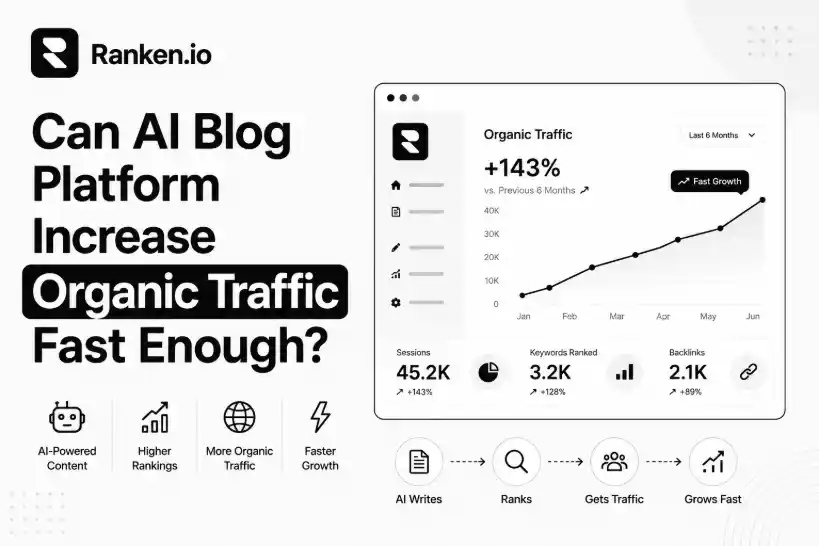
Use an AI publishing platform to push price updates, new testimonial snippets, and seasonal angle adjustments automatically. Schedules locked to 6 a.m. UTC maintain freshness signals that search engines reward. One site running 17 review pages reported a 3.2× domain authority increase in nine months after switching to daily automated updates.
Connect the system to your main site so every new affiliate article inherits the same template and schema markup. Ranken handles the publishing pipeline so growth teams focus on testing rather than formatting.
Measure the right leading indicators
In today's competitive online landscape it is essential to track scroll depth past the first comparison table and measure the time-to-first-click on affiliate links rather than relying solely on raw page views as primary performance indicators. By focusing on these more nuanced metrics website owners can gain deeper insights into user engagement and behavior. When these two metrics improve together over time the conversion rate typically follows within a span of two weeks leading to higher revenue and better affiliate partnerships. Furthermore it is advisable to establish a consistent 120-day review cadence where you evaluate all products in your portfolio.

In conclusion, this approach ensures that resources are allocated efficiently and that only high-performing products remain featured on the platform. For further reading, explore our related articles Best AI Blog Writer Tools Comparison 2026 & AI Workflows for Shopify Product Blogging .