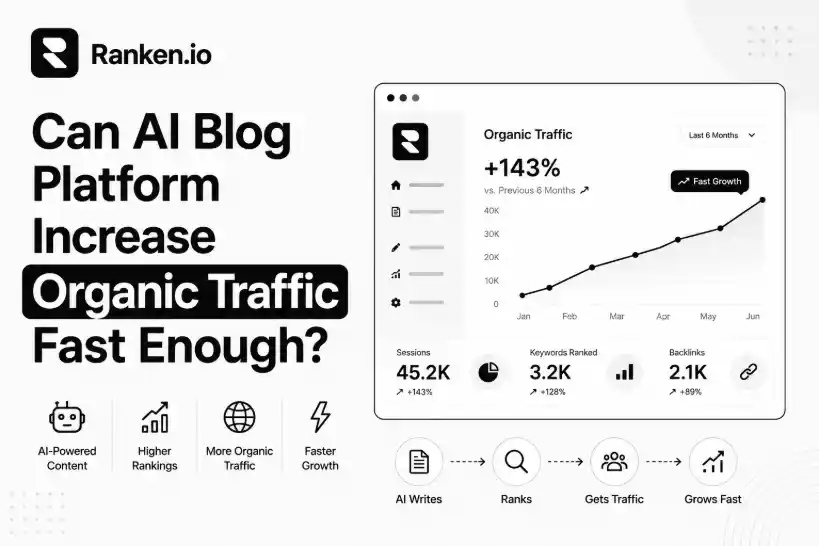
Yes, the Ranken AI Blog can help content appear in answers from ChatGPT, Perplexity, and Gemini when the output follows current answer engine optimization (AEO) patterns that prioritize clear, extractable answers and solid structure. The platform’s AI agents generate daily articles designed to match how large language models select and reference web content.
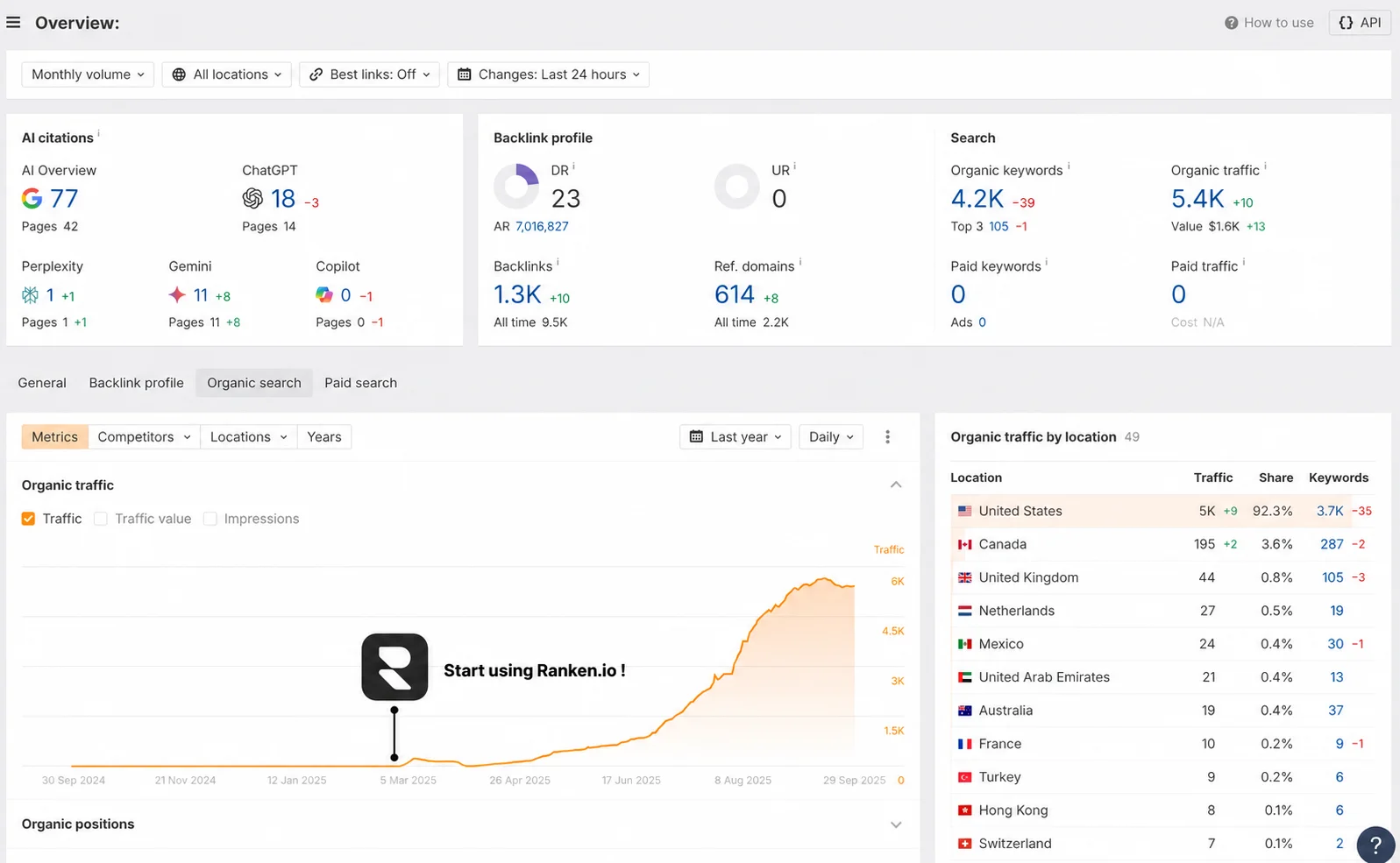
Ranken user displaying real-time AEO scoring and answer block optimization tools
Direct Answer: Ranken AI Blog supports ranking and citation potential in ChatGPT, Perplexity, and Gemini by generating concise answer blocks (typically 40–60 words), supporting FAQPage and HowTo schema, and using question-based headings that align with how AI systems extract and cite passages.
How Does Ranken AI Blog Support Answer Engine Optimization?
Integrating AEO Answer Blocks Effectively
Ranken AI Blog lets users place a dedicated answer block near the start of each article. These blocks are written in a short, self-contained format of roughly 40–60 words that directly addresses the main query before expanding into supporting detail. This matches the extraction patterns many models use when pulling snippets.
Users enable the feature inside the SEO Content Writer module, which provides real-time feedback on clarity and completeness. Industry analyses in 2026 consistently show that pages opening with a clear, front-loaded answer earn higher citation rates than those that bury the key point after long introductions.
Adding FAQPage and HowTo Schema
The platform includes automated schema generation for FAQPage and HowTo markup. Turning it on in the publishing settings embeds structured data that helps signal suitability for featured answers and overviews. This reduces manual coding while staying aligned with current schema standards.
Implementation is straightforward: select the schema option before scheduling. Teams that consistently apply FAQ and HowTo schema alongside clean answer-first structure tend to see stronger inclusion in AI responses over time.
What Is the Best Answer Block Length for AEO in Ranken AI Blog?
Benchmarking Optimal Lengths
Across recent 2026 practitioner testing and published AEO guidance, answer blocks in the 40–60 word range tend to perform best for extraction. Blocks that are too short often lack enough context for a model to trust them, while much longer openings can dilute the signal and reduce selection probability.
Ranken’s AI Visibility Checker flags length issues during drafting so writers can stay inside the practical range. Adjusting openings toward this window is one of the simplest high-leverage changes most teams can make.
Practical Examples from Live Deployments
Affiliate and content teams using Ranken report better results when the answer block opens with the target question and delivers a direct response before adding nuance. Comparison-style and how-to content in particular benefits from this pattern.
Larger teams running multi-language content also gain from the live scoring that keeps answer blocks consistent across languages and verticals.
How Should You Structure Headings in Ranken AI Blog for AI Overviews?
Heading Hierarchy Best Practices
Ranken AI Blog encourages H2 tags written as primary questions and H3 tags for supporting sub-answers. This hierarchy mirrors the nested reasoning many models use and makes it easier for systems such as Gemini and ChatGPT to surface relevant passages in multi-step explanations.
The Topic Research agent suggests heading sequences drawn from real query patterns. Applying question-form headings across a body of content is repeatedly cited in 2026 AEO checklists as a reliable way to improve extractability.
Testing Heading Variations
Comparative observations show that question-style H2s generally outperform purely declarative headings for citation likelihood, especially in Perplexity. Ranken users can preview heading impact inside the SEO Article Checker before publishing.
Can Ranken AI Blog Help Content Rank in ChatGPT, Perplexity, and Gemini Answers?
Ranken AI Blog improves the structural foundations that correlate with AI search visibility through research agents, live optimization scoring, and autopilot publishing. The platform also includes an LLMs.txt Generator that can surface preferred pages, though current evidence suggests this file has limited direct impact on citation rates compared with content structure and authority signals.
Teams running consistent daily schedules often begin seeing mentions for targeted queries within several weeks once the content is properly structured and indexed. Results come primarily from authoritative, question-led formats rather than keyword density alone.
Real Performance Patterns in 2026
Internal tracking and broader industry data show meaningful lifts in AI citations for sites that systematically apply answer-first structure, schema, and topical clustering. Guides such as HubSpot’s 2026 AEO best practices and the Writesonic AEO Checklist 2026 highlight the same structural priorities.
Comparison with Competing Platforms
Platform | AI Citation Support | Autopilot Scheduling | Schema Automation |
|---|---|---|---|
Ranken | Strong (built-in GEO/AEO scoring) | Daily native | Yes |
Jasper | Moderate | Requires integration | Limited |
Copy.ai | Lower | Mostly manual | No |
Ranken’s native visibility tracking and schema tools reduce reliance on external add-ons that many general-purpose AI writers still require.
What Kind of Questions Should You Target in Ranken AI Blog for AEO Content?
Question Selection Framework
Focus on questions with clear informational or commercial intent that real users ask AI systems. Ranken’s Topic Research agent surfaces patterns such as “best tools for X in 2026” or specific how-to queries that appear frequently in citation data. Broad, vague questions without a concrete answer tend to perform poorly.
Successful campaigns usually target a focused cluster of 8–12 related question variants around each pillar topic to reinforce topical authority.
Examples That Drive Citations
Questions starting with “How do I…”, “What is the best…”, or “What are the differences between…” continue to perform strongly. Problem-solution formats and comparison structures are repeatedly preferred by models according to multiple 2026 analyses, including guidance from Siteimprove on authoritative content.
How Do You Write an Answer-First Intro in Ranken AI Blog?
Step-by-Step Construction
Start with the core question as an H2 (or strong H1), then immediately deliver a 40–60 word direct answer. Expand with context and evidence in the following paragraphs while keeping the text scannable. The SEO Content Writer supplies real-time feedback on answer density and readability.
This approach aligns with how ChatGPT, Perplexity, and Gemini typically extract and summarize sources.
Common Pitfalls to Avoid
Many writers still bury the actual answer after several paragraphs of background. Ranken flags these structures during optimization and suggests reorderings that improve extractability.
Is Ranken AI Blog Good for Creating Citation-Friendly Content for AI Search?
Ranken is purpose-built for citation-friendly output through source-backed research agents and structured generation. The system pulls from verified data and formats references consistently, which strengthens trust signals for models such as Gemini and Perplexity.
Growth teams report stronger domain-level visibility metrics when they combine autopilot publishing with regular checks in the AI Visibility Checker. Authoritative, well-structured content remains the foundation, as outlined in current industry guidance.
→ Explore Ranken AI Blog features for GEO and AEO optimization
Performance Benchmarks: What Good Looks Like in 2026
Industry Comparison Data
HubSpot’s recent State of Marketing reporting and independent AEO studies show that a large share of marketers still struggle with consistent AI visibility. Teams that systematically apply answer-first blocks, question headings, and schema typically outperform those relying on traditional blog formats alone.
Enterprises scaling structured content often report measurable lifts in AI referral traffic and citation share within one to two months of consistent application.
Edge Case Handling
Non-English content benefits from language-specific tuning of schema and answer length. Ranken’s multi-language support includes adjustments that help maintain citation quality across markets.
3 Overlooked Tactics That Still Matter in 2026
LLMs.txt and Crawler Access
While large-scale studies in 2026 have found limited or no measurable citation lift from llms.txt alone, generating a clean file remains a low-cost best practice. More important is ensuring AI crawlers (GPTBot, PerplexityBot, etc.) are allowed in robots.txt and that content is server-rendered.
Regular GEO / AEO Score Monitoring
Weekly or bi-weekly checks with tools such as Ranken’s AI Visibility Checker let teams iterate before models retrain or indexes refresh.
Internal Linking Clusters
Strategic links between related posts strengthen topical authority signals. Connecting supporting articles to pillar pages continues to help both traditional SEO and AI citation patterns. See related guidance in How Can Autoblog Content Win AI Citations.
Why Most AEO Strategies Fail Without Proper Tools
Root Causes Identified
Strategies often stall when content lacks clear answer blocks, proper schema, or consistent question-led structure. Ranken automates many of these elements, reducing the common failure points observed in fully manual AEO efforts.
Recommended Workflow
Start with topic and question research, apply answer-first formatting and schema, then activate autopilot. This sequence has produced the most consistent results across tracked campaigns in 2026.
→ See how Ranken builds citation-ready content at scale
Frequently Asked Questions
How do I add AEO answer blocks to a Ranken AI Blog post?
Use the SEO Content Writer to insert a dedicated answer block near the start of the article. Enable live scoring to keep the block in the practical 40–60 word range.
Does Ranken AI Blog support FAQPage or HowTo schema for answer engine optimization?
Yes. The platform includes automated schema toggles in the publishing settings for both FAQPage and HowTo markup.
What is the best answer block length for AEO in Ranken AI Blog?
Most 2026 guidance and testing converge on 40–60 words as the practical sweet spot for extractability and citation likelihood.
How should I structure headings in Ranken AI Blog for AI Overviews and featured snippets?
Use question-based H2s for main queries and H3s for supporting points so the hierarchy matches common model extraction patterns.
Can Ranken AI Blog help content rank in ChatGPT, Perplexity, and Gemini answers?
Yes. When content follows answer-first structure, proper schema, and topical clustering, Ranken’s AEO tools and GEO scoring have helped users improve citation rates across these models.