Map buyer intent before writing a single word
B2B SaaS buyers rarely search broad category terms. They type queries that reflect active problems such as “how to reduce churn in subscription billing” or “API rate limit best practices Stripe alternative.” Start by pulling the last 90 days of support tickets and sales call notes, then group recurring pain phrases into clusters of 8–12 related searches. This list becomes your content map instead of generic keyword tools that surface consumer terms.
One nuance most teams miss is weighting queries by deal size. A term that appears in 40 percent of seven-figure evaluations deserves priority even if search volume sits below 200 monthly queries. Assign each cluster a revenue potential score based on closed-won data from your CRM before assigning writers.
Build technical pages that rank and convert
Comparison tables, integration directories, and pricing explainers convert at 4–7 percent for most SaaS sites. Create one dedicated page per major competitor and one integration page per key partner. Each page should load under 2.5 seconds on 3G connections and include schema markup for FAQ and software application types.
Internal linking matters more than external links at this stage. Every new comparison page must point back to your product-led growth case studies and the main pricing page using exact anchor phrases prospects actually use. Track crawl depth in Google Search Console; if important pages sit deeper than three clicks, restructure navigation before publishing more content.

Use case studies as cornerstone assets
Case studies outperform blog posts for B2B SaaS when they include raw before-and-after metrics. Publish one every quarter that shows a customer reducing time-to-value from 14 days to 3 days or cutting support tickets 62 percent after implementation. Host the full PDF behind a light form and link the excerpted HTML version from every relevant comparison and integration page.
The counterintuitive finding is that shorter case studies (under 800 words) with downloadable spreadsheets often outperform long narrative versions. Readers forward the spreadsheet internally, creating natural backlinks from prospect sites that later link back when they publish their own results.
Fix crawl waste before chasing backlinks
Most early-stage SaaS sites waste crawl budget on staging subdomains, old blog posts, and duplicate feature pages. Use a site audit tool to list all URLs returning 200 status, then apply canonical tags or 410 responses where duplication exists. After cleanup, resubmit the sitemap and monitor index coverage reports for the next 30 days.
Only after this audit should you pursue external links. Target directories such as G2, Capterra, and industry-specific resource lists first. These links pass authority faster than guest posts and require less outreach time.
Measure leading indicators weekly
Track impressions for target clusters and average position for comparison pages every Monday. When impressions rise 15 percent week-over-week but clicks stay flat, revise meta descriptions to match current search snippets rather than adding new articles. This single adjustment has lifted click-through rates 30–40 percent for several SaaS sites within two reporting cycles.

Scale content production without hiring a full team
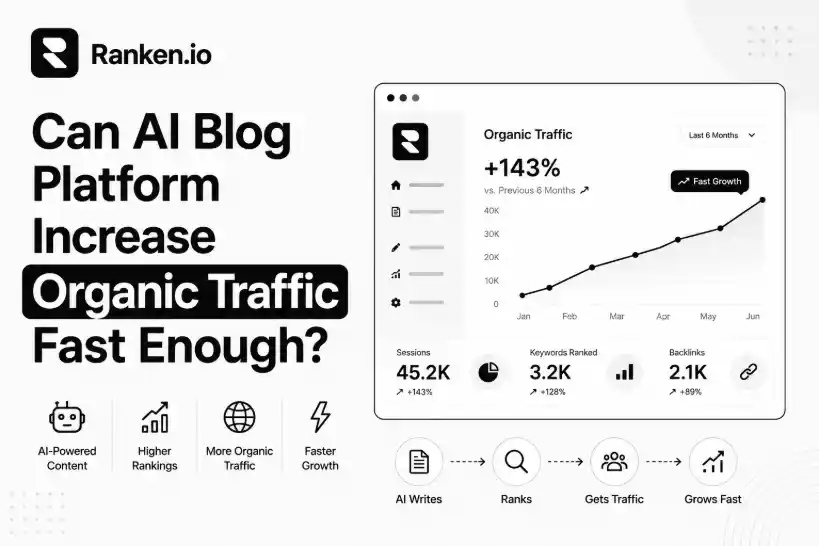
Services like Ranken specialize in scanning existing SaaS documentation and support resources to surface content gaps that match buyer queries. They produce drafts already optimized for the site’s niche terminology and allow instant publishing or scheduled autopilot mode.
Ranken’s Approach to B2B SaaS Organic Growth
Ranken scans your current site structure, identifies underperforming clusters, and generates SEO-ready drafts that align with existing brand voice and technical terminology. Teams can edit in the built-in rich editor that shows live SEO scores or let autopilot publish approved templates on a recurring schedule. See how Ranken handles AI-powered blog setup for startups without requiring developers.
Link strategy that compounds over quarters
Instead of one-off outreach campaigns, embed link requests inside product updates and community contributions. When releasing a new integration, write a short technical breakdown and share it in the partner’s own community forum with a link back to your integration page. This method yields referral traffic within days and lasting domain authority from relevant sites.
One additional internal link placement appears naturally here: many teams later review Optimizing AI Content for B2B SaaS Lead Generation when they begin testing AI-assisted drafting at scale. A second useful reference is Fixing Low Traffic Issues in AI-Generated Blogs once initial content volume increases but rankings plateau.